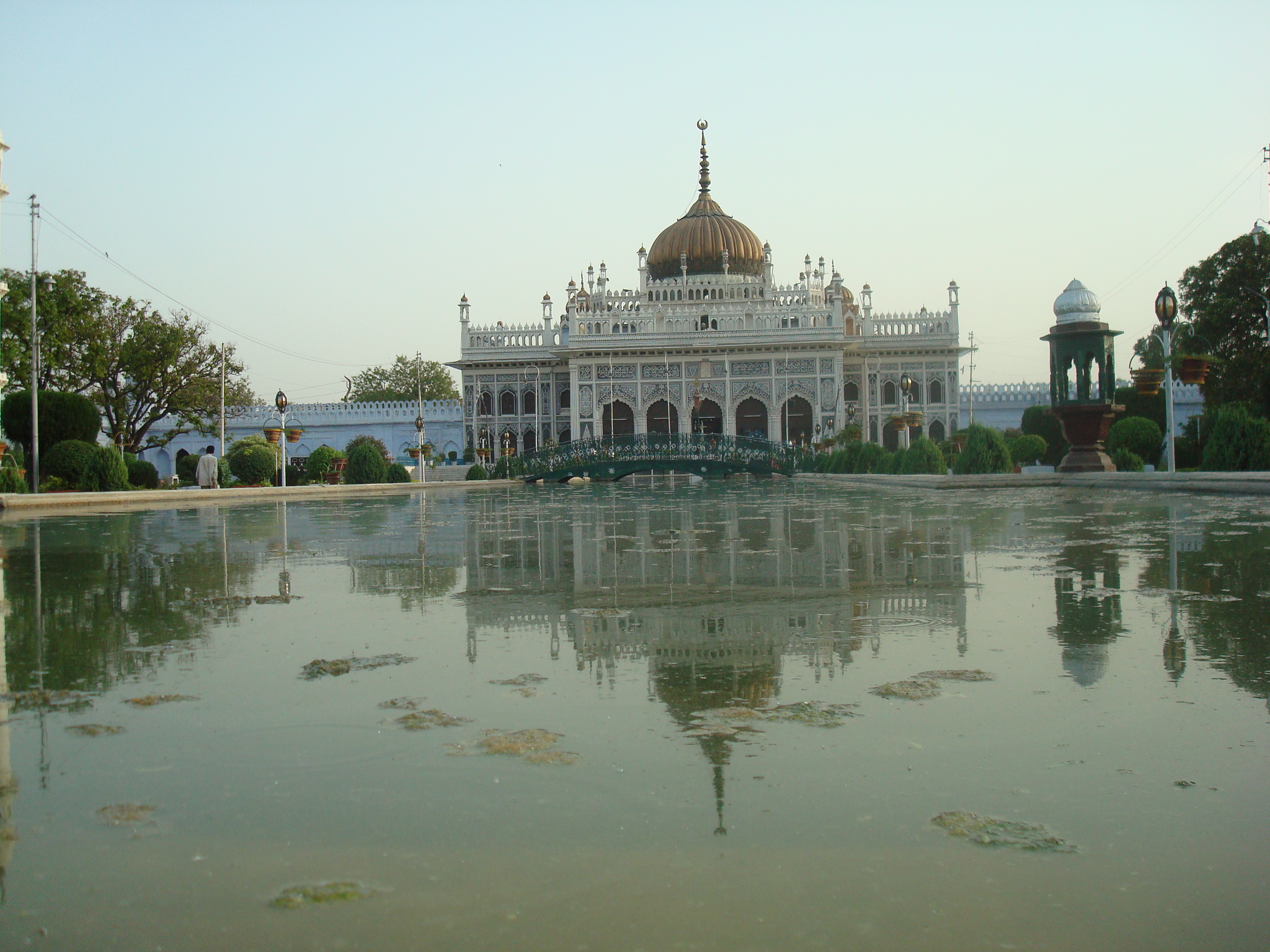
Chota Imambada
Description
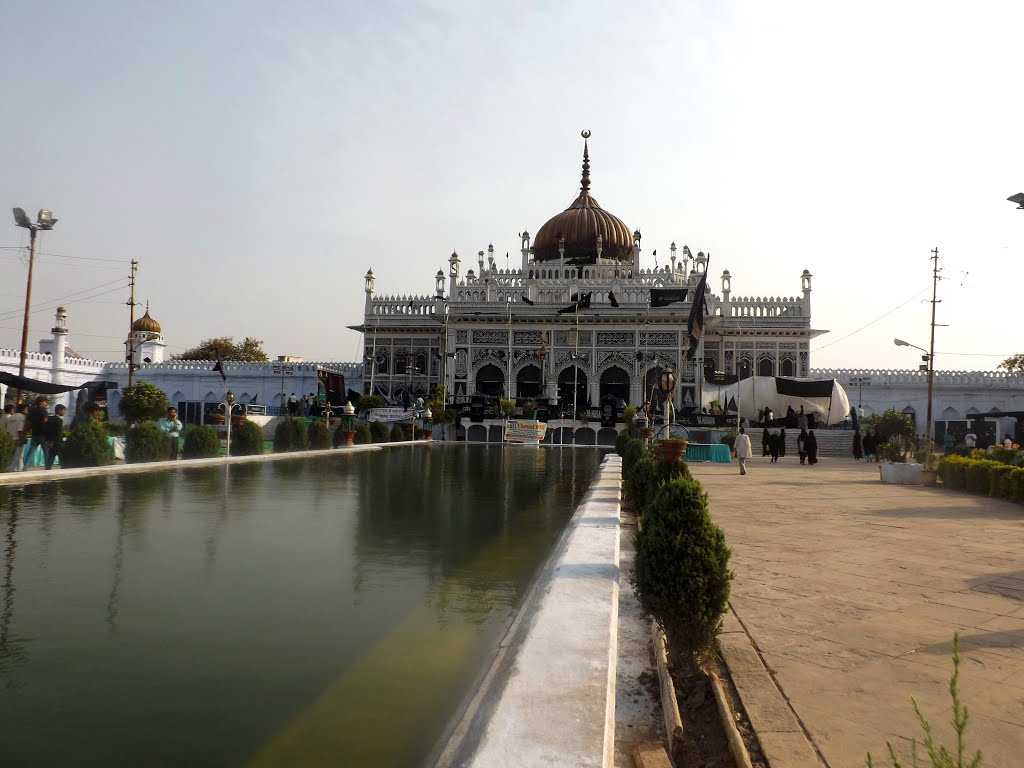
Architecturally, the Chota Imambara is considered to be a more magnificent wonder than its bigger counterpart, the Bara Imambara. With its baroque carvings and exquisite calligraphy, the Chota Imambara surpasses every other heritage structure in Lucknow. The magnificent structure has been inspired by the design of the Charbagh pattern, with a single stream running through the centre of the garden. It is an amalgamation of the elements of Persian and Indo-Islamic styles of architecture.
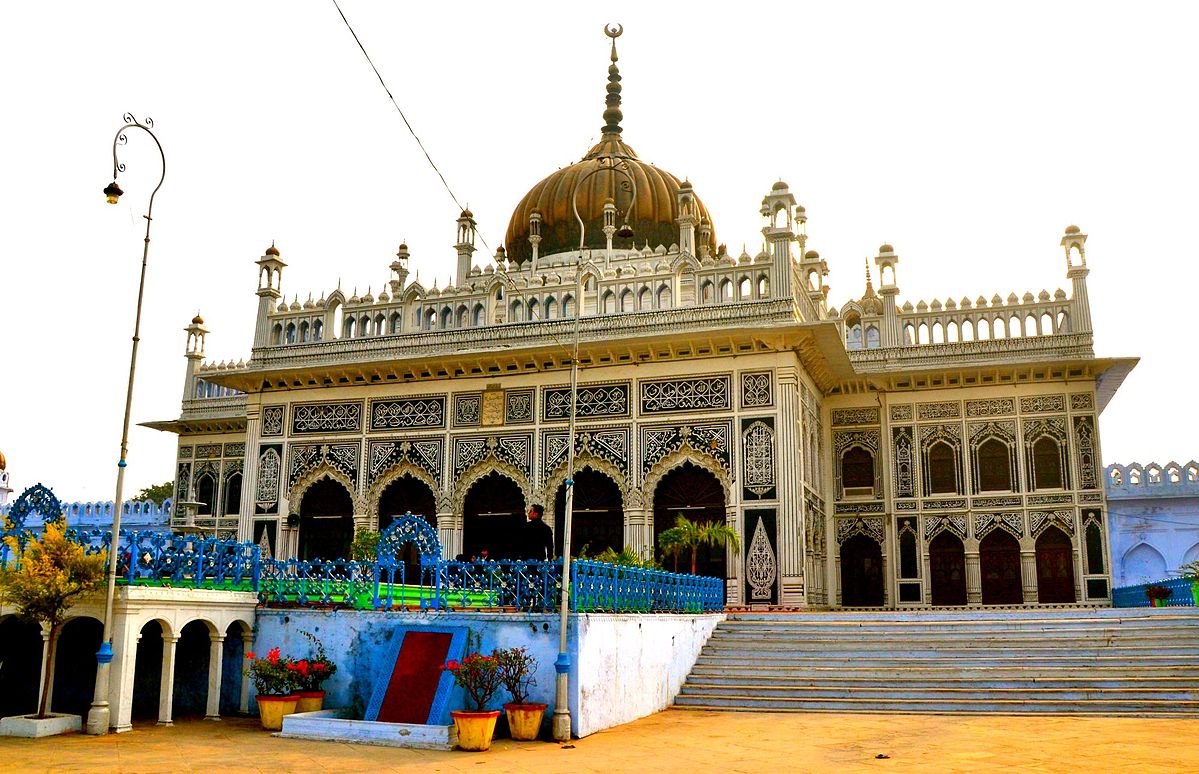
The interiors of this artistic monument are decorated with delicate Arabic glass work and calligraphy. Ornately designed with a gilded golden dome, exquisite chandeliers specially brought from Belgium, colourful stuccos and gilt-edged mirrors, this attraction is an architectural dream which has been breathed life into.
The five doorways of the Chhota Imambara emphasize the significance of 'Panjetan' or the holy five. The Imambara comprises of two halls and a Shehnasheen, which is a platform where the Zarih of Imam Husain is kept. The large green and white-bordered hall of Azakhana is richly decorated with chandeliers and a good number of crystal glass lamp-stands.
The monument houses the tomb of Muhammad Ali Shah as well as four graves; of the son, daughter, son in law and of the lady. This structure thus becomes a small-scale copy of the majestic Taj Mahal. The walls are adorned with Arabic calligraphy and never fail to please onlookers. The water bodies and fountains inside the Imambara get water supply from the River Gomti.
The Husainabad Mosque which can also be found inside the main monument is constructed on a raised platform with two grand minarets on the edge of the platform. The mosque is decorated beautifully and intricately with floral designs and Quranic Calligraphy.
More Details
The Chhota Imambara, or the Imambara of Hussainabad, is one of the most beautiful and attractive
buildings in the old city of Lucknow in Uttar Pradesh. This imposing monument lies to the west of
Bara Imambara and is a true sight to behold. The Chhota Imambara was initially a congregation hall
for Shia Muslims that was built by Muhammad Ali Shah, who was the third Nawab of Awadh, in 1838. The
Imambara was to serve as his own mausoleum as well as that of his mother, who is buried beside him
in this prestigious monument.
The Imambara is beautifully adorned with decorations and chandeliers at the time of special
festivals, especially Muharram. In fact, this 19th-century building is also referred to as the
'Palace of Lights' by European visitors and writers because of the profuse decorations of the
monument at specific events.
It is a beautiful amalgam of Charbagh, Indo-Islamic and Persian structural and architectural
designs. The exterior is complete with Quranic verses which are written in Islamic calligraphy on
the walls of the monument. However, it is not just the exterior of the Imambara which catches the
fancy of the eager visitors. Even the interiors of the monument are designed and maintained with
intricate details and utmost care.
Highlights:Non-Muslim visitors are not allowed inside the
mosque located within the monument complex.
Tourists are advised to start their tour with the Bara Imambara, and then visit the Chhota Imambara
later on. You can club your visit with nearby locations such as Jama Masjid, Clock Tower and Rumi
Darwaza.
It is a wise idea to seek the help of a guide which is available for a minimum rate of INR 20
onwards in the monument.
Distance from Lucknow Airport: (18.5 km) via NH230 and
VIP Rd.
Entrance fee: Indians: INR 25,
Foreign Nationals: INR 300.
Timing: 6:00 AM - 5:00 PM.
Location: Chota Imambara, Tahseen Ganj, Husainabad,
Lucknow, Uttar Pradesh 226003.