Mahatma Gandhi Setu
Description
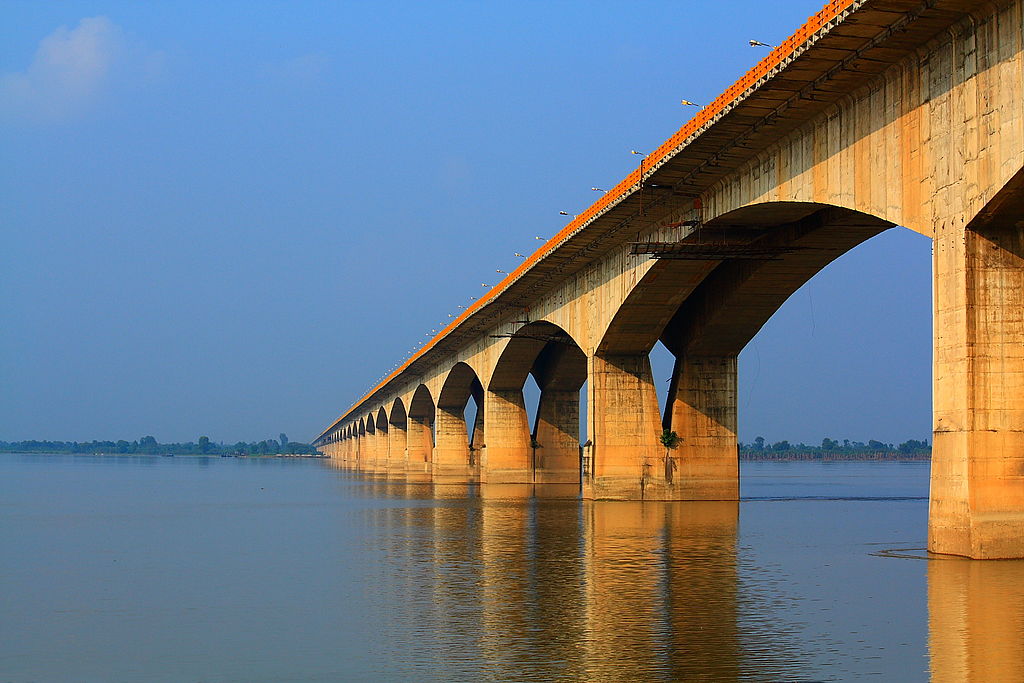
Before its erection, the Rajendra Setu was the only link between northern and southern Bihar, 90 kilometres east of Patna. The lengthy viaduct was commissioned in 1969 with Gammon India Limited undertaking construction in 1972 until it was inaugurated by former prime minister Smt. Indira Gandhi in 1982. The primary purpose served by Mahatma Gandhi Setu is the connecting of the northern part of the state with the rest of it and a portion of NH19. Serving as a lifeline for thousands of people in and around the region, the bridge is a remarkable feat of engineering with forty-five piers each of height 121 meters supporting it, leaving enough space underneath to fit a ship. Its legacy stands strong as a commemorative postage stamp of denomination 0500 paise was released in 2007 on the Landmark Bridges of India.
The bridge was asked to be commissioned by the Bihar State Road Development Corporation. In 1969, the Central Government approved, and construction was assigned to the largest civil engineering construction company in India, Gammon India Limited. Works began in 1972 and took 10 years for completion. Supposed to have been opened to the public in 1978, it was the subject of delays due to natural disasters and workers' strikes. It took around INR 87 crores approximately to cover the building and maintaining expenses. It is now maintained by National Highways Authority of India (NHAI). Before Mahatma Gandhi Setu, Rajendra Setu, a bridge with a two-lane road and a single line railway track were the only means of road communication between north and south Bihar.
Constructed by India's largest civil engineering construction company, the bridge is considered to be an engineering marvel by many. The bridge has 45 spans of 121 meters each and one span of 65.53 meters on both sides. Cantilever slabs with hinge bearings and box girders were used. This kind of technology being used back in the 1970s truly makes this one of the best feats of Indian engineering. The building of the bridge cost a whopping 88 crore.
In 2016, the District Administration of Patna came up with a calendar of events to be held all year round on the grounds. According to the Divisional Commissioner, a special event will be held every month. Starting with the New Year program in January, the other months are taken up in the following manner: Vasant Festival in February, the Pataliputra festival in March, Trade and Tourism fair is reserved for April, the Patna Inter-School Championship in May, the Shilpostav, an event for craft exhibition in June, the Sawan Festival in July, August is set for the Patna Film Festival, the National Drama Festival in September, the Vijaydashmi Festival in October, Sharad Utsav in November, the Fun and Food Fair and Half Marathon in December.
The bridge is now in a dilapidated condition owing to the massive overload caused by thousands of vehicles passing by. Heavy exceeding traffic has caused a rise of pollution and accidents. Chaos and congestion in the form of long traffic jams are a daily affair. The condition of the bridge is so delicate that it might crumble down at any given moment. After 15 years of failed efforts made by the Ministry of Road Transport and Highways, Prime Minister Narendra Modi inaugurated the repair work for the bridge in January 2017. The existing superstructure shall be dismantled, and a complete rehabilitation is to be done. Meanwhile, two pontoon bridges running parallel to the setu have been constructed to facilitate decongestion of overflowing traffic.
More Details
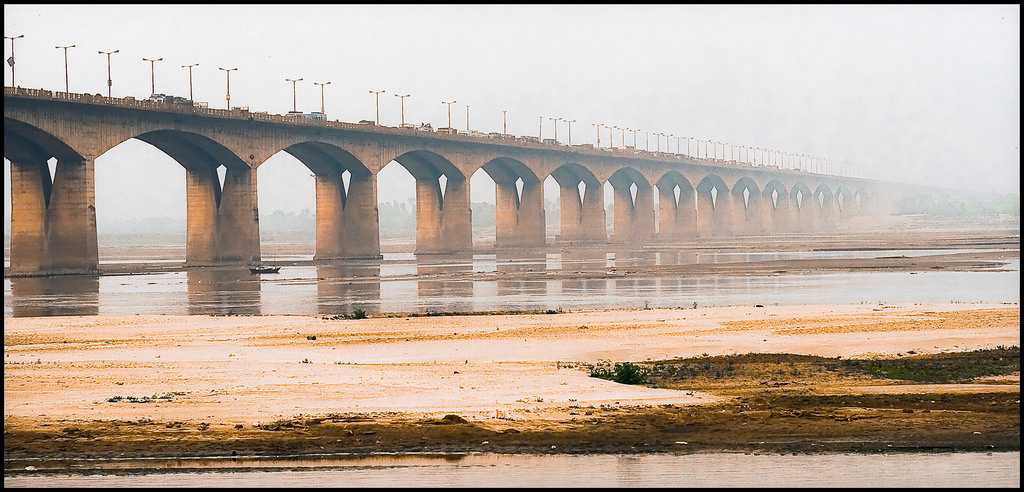
Mahatma Gandhi Setu is the second longest river bridge in India, the first one being Bhupen Hazarika
Setu (a.k.a. Dhola-Sadiya Bridge) in Assam. The Mahatma Gandhi Setu in Bihar extends over the Ganges
for 5.7 kilometres. Named after the father of the nation, the bridge connects the capital city of
Patna in the south to Hajipur in the north. The bridge has four lanes of roadways and pedestrian
pathways on each side, it is an indispensable part of the daily vehicular transport. Earlier, there
used to be toll gates, but the Government has revoked that. It provides some spectacular views of
the sacred Ganga flowing underneath.
Currently, the National Highway 19 operates through it. The government has scheduled the building of
two Pontoon bridges (floating bridges) parallel to it to curb traffic, which has drastically
increased over the years. Before the erection of the bridge, people from this region travelled to
Patna and Hajipur respectively by ferries or boats. Although congestion and traffic problems are
present on the Mahatma Gandhi Setu, its significance cannot be contradicted.
Gandhi Ghat is one of the most popular ghats on the banks of the river Ganges in the city of Patna
in Bihar. It is popular as the ashes of Mahatma Gandhi were immersed here. The highlight of the
place is however, the magnanimous Ganga Aarti that is attended by thousands of devotees as well as
tourists. The aarti is performed at dusk, with 51 lamps by a group of priests who are dressed in
saffron robes. This activity was started in 2011 and was inspired by the ones that are performed in
Varanasi and Haridwar.
Highlights:This bridge is the lifeline of two districts,
Patna and Hajipur. Hence, it can be reached from either north or south Bihar. Patna is well
connected to nearby major cities like Lucknow, Allahabad, Kolkata and Kanpur. Some interstate
transport buses locomote on a daily basis and are an option.Take great care while riding/driving on
this bridge as it is prone to massive jams.
Be aware of the traffic and congestion problems on the bridge as it undergoes repairs at some part
or the other on an almost daily basis. Also, Hajipur is famous for its abundant banana production.
Distance from Patna Airport: (15.4 km) via Kumhrar
Rd/Patna - Parsa - Siwan Hwy.
Entrance fee: The toll fees depend on the GST decided
by the govt. and the type of vehicle.
Timing: Always open.
Location: Chapra-Patna Hwy, Muhammadpur, Patna, Bihar
800007.